All Jobs
Fully-Funded Open PhD and Post-Doc Positions (m/f/d)
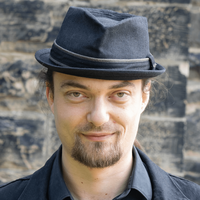
Mario Krenn from The Cluster of Excellence – Machine Learning for Science is looking for PhD students and post-docs.
Mario Krenn's group builds artificial intelligence systems for discovering new concepts, experiments and ideas in physics. To accelerate this effort, they need your help! The group has several fully funded open PhD and Post-Doc positions (m/f/d) in their group – which just moved from the Max Planck Institute in Erlangen to the University of Tübingen, one of Europe’s most vibrant hubs for artificial intelligence research.
A list of concrete potential projects:
- Development of modern auto-differentiation (JAX-based) physics simulators for the discovery of new physics experiments (example here)
- AI-driven discovery of hardware for some of the most thought-after quantum information technology, quantum-enhanced microscopes and telescopes (example here), and AI-driven discovery of new physics experiments to test quantum-gravity and observe gravitational waves (examples here and here)
- Inventing state-of-the-art AI-driven exploration, optimization, and search algorithms in extremely complex and enormously large spaces motivated by physics and chemistry
- Developing interpretable AI for scientific discovery in physics (example here)
- Formal mathematics (using Lean’s mathlib) for Automated Discovery in Physics
- Agentic frameworks (e.g., LLMs with tool-use) for closed-loop idea generation for physics (example here)
Other projects are certainly possible too. In general, the group believes that building autonomous scientific systems is not just a technical question, but requires understanding and insights from the philosophy of science – see e.g. here.
If you are excited to use artificial intelligence techniques for scientific discoveries in physics, send us your application, including a CV, a short explanation of your motivation, and the names and contact information of two potential references to mario.krenn@mpl.mpg.de. The opening will remain valid until the position is filled.
The positions are funded via the Cluster of Excellence (Machine Learning for Science), the ERC Starting Grant ArtDisQ, and the University of Tübingen. Salary will be determined according to the German collective wage agreement in public service (E 13 TV-L). The University aims to increase the proportion of women in research and teaching and therefore urges suitable, qualified women scientists to apply. Qualified international researchers are expressly invited to apply. Disabled candidates will be given preference over other equally qualified applicants. The university is committed to equal opportunities and diversity. It therefore takes individual situations into account and asks for relevant information. The employment will be handled by the central administration of the University of Tübingen.